Video Games Are a Waste of Time
Last updated: 2026 / 03 / 08
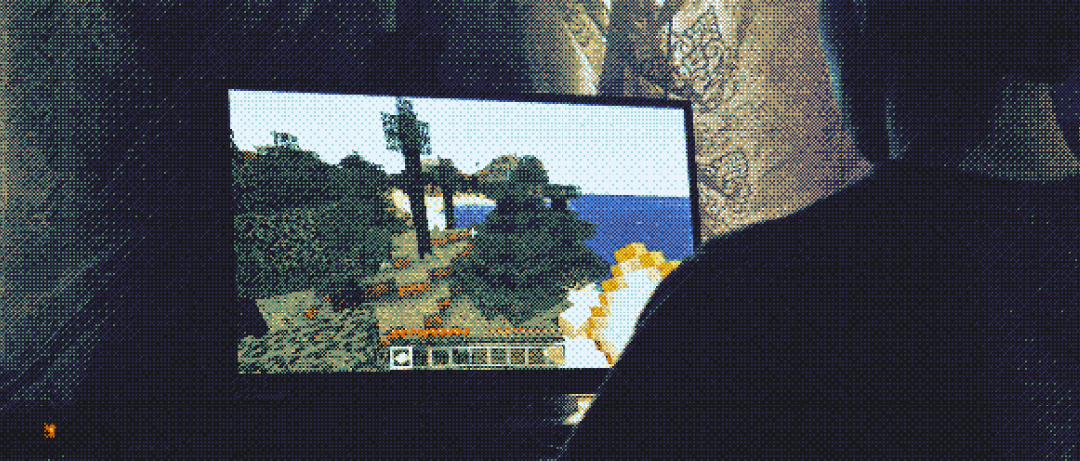
Some of them...
In some contexts...
Video games, are truly a waste of time, some of them.
And it has always irked me how people have normalized, glamorized and even championed the effort and the countless hours spent on something that realistically, does not have any appliances or usefulness in the real world.
Unless it's GamesDoneQuick, a fundraiser or a cooperative night with your friends; your time and effort it's truly going nowhere. Personal achievements within a game rarely reach the satisfaction and fulfillment a hobby or real life activity can bring. It doesn't bring a better future, it doesn't bring an opportunity, it doesn't bring a new skill, and, in the worst cases, it doesn't even bring you a good time (see Solo Queue).
It's also accompanied with this gigantic social horde that spells nothing but excuses and justifications for this so mistakenly called hobby, people suddenly become extremely stubborn to not be at the very least objectively about their favorite activity.
In this day and age, it's impossible to be ignorant and indifferent about them as they have also become synonymous of the current culture. Memes, social interactions, business, marketing, and even education.
It is expected for children to become exposed to them at a young age, and although one might expect for them to "grow up" from them in their early adolescence, the reality is that gaming stays with them for a large amount of their life, and in the worst cases, they become their entire personality.
Video games having a large impact on someone's life is not the problem. In fact, they can provide many positive and influential experiences for children and young adults. The real problem arises when addiction and excessive time spent playing begin to dominate their daily lives. They become the core of where they get their most valuable experiences, difficulties and morals. Children and young adults do not develop their moral values or problem-solving skills through real-life experiences. Instead, they derive them from fictional characters, which are limited in the first place because they were never designed to serve that purpose.
What is more troubling is how narrowly the criticism of gaming has always been framed online. The discussion has rarely moved beyond calling it a form of false progress driven by virtual bars and rising numbers, which even then, only gets assigned for Gacha or grindy smartphone games.
Every other criticism is largely ignored, met with excuses, and justified at all costs, because sadly, gaming it's one of the most important things they have in their life. Not that it's the only thing they have, but rather, something that has become so critical, important and part of their whole existence.
In other words, criticism of their favorite, and possibly hobby is taken as criticism to themselves.
The slow and mainstream transformation of video games
One of the most interesting things that have happened to video games is how slowly they went from the hardest recreational activity found only on a confined space, to an ever increasing accessible, and effective time waster.
In the early 2000s, gaming was more seen as as unique and different activity, one could easily get into video games without feeling pressured into learning its intricate strategies and endless grinding just so they could get a "full experience" out of them.
Story Mode, Campaign Mode, Story-driven titles, etc.
It was a brief period of time where game developers understood there was an audience that wanted to play video games without being overtly challenged, which was, ironically, a large contrast in how video games were originally positioned.
Back then, unfair difficulty and trial-and-error strategies was the de-facto design for the early arcade machines, and some still argue that this is how games should had remained. Yet this very rigidity was also why gaming struggled to achieve widespread appeal even after the arcade times. Everyone had this obsessive need to play every game in the hardest difficulty, not for enjoyment, but as a performative act, as a proof of being a "true gamer". A social validation of sorts, no matter how much time it could take.
But as time went on, story-driven games and the indie market started to gain popularity and soon enough managed to sit beside those hardcore video games that once scared new people from the entire medium, as a different choice within the hobby.
Once those step curves of difficulties fell, the video game market began to acquire an audience that seemingly never stopped growing ever since. It took a while for this transition to occur, but it did finally happened. Somehow, not long before this transition happened, it inadvertently became an activity that people started defaulting into every day.
It was an activity that was so fun, so engaging and attractive it inadvertently became addictive, even if the game wasn't necessarily engineered to be addictive. Little by little, it turned into an habit, a routine, a life style or even worse, an activity people wanted to pursue professionally.
Nowadays, it's terrifying and even unsettling, to see Steam profiles carry thousands of hours spent into either Counter Strike, Team Fortress 2 or Runescape. And in the case for people who exclusively doesn't play with friends, what's the end goal for keeping this habit?
One could argue that gaming develops a handful of soft skills, communication, rapid decision-making, problem solving, hand-eye coordination...
But unless those skills are being deliberately pursued, unless one is playing competitively, consciously extracting value, or translating those abilities into something useful, most gameplay sessions amount to little more than another hour quietly wasted from one's life.
And if we looked it within the social aspect while also excluding online friends sessions, it hardly ever develops someone as a person.
There's also the hard truth in that, sometimes, those long hours poured into any video game might not always mean you're a professional at it. It may only reflect repetition without growth, which I know for a fact it's a majority of gamers.
This is where talking about video games as a hobby gets complicated.
Because it seems that people in their incompetence or rose tinted glasses, will only see extremes about this discussion as soon as their favorite, harmless, passive and rarely social activity gets mildly criticized once.
It is entirely reasonable to accept that not every free hour of our lives must be productive. We cannot realistically force ourselves to learn something new or work indefinitely; sooner or later, our bodies demand rest or some form of leisure However, if my points so far seem to suggest that everyone on earth must pursue a hustle or productive hobby and quit video games or any other form of leisure altogether, that is not what I am trying to say.
In teenagers or younger adults, leisure should not default to something as empty as endless gaming consumption. It should never be their first "do something" activity.
And since this activity is mentally "more active" than doom-scrolling or passively watching streaming services media, it narrowly has made its way into society as a passable activity, at least within the realms of the Internet.
The time you enjoy wasting is not wasted time
Before continuing...
I am not criticizing the act of playing a game for an hour or two. I am criticizing the pileup of hours. I am criticizing the way some people quietly sink large chunks of their day in only video games, day after day, because at that point, it stops being a hobby and becomes the only constant and structure of their time and life.
There's this one annoying phrase "gamers" like to repeat to others and themselves:
"The time you enjoy wasting is not wasted time"
This mantra inevitably appears at some point in the discussion. More often than not, it becomes the first line of response to any criticism of the hobby. It functions less as a serious reply and more as a consciously directed escape from the argument. It also reframes the issue as a purely emotional matter, personal satisfaction or entitlement, while ignoring how heavily the hobby may outweigh other parts of their life, including work, social life, and even other hobbies.
Sure, anyone can have fun in a solo Fortnite match, but do you really need to pour six hours into it every day just to extract this so called time you enjoy wasting enjoyment?
Are you genuinely having fun for all six of those hours, alone?
Even more creative or rewarding hobbies eventually reach a saturation point, often after a few hours before they begin to feel repetitive. Gaming, by comparison, tends to erase one's awareness of time, a phenomenon people commonly joke about: "I played some CS:GO and suddenly realized it was two in the morning," and many such cases.
At the other extreme of the discussion I mentioned earlier, there is also the group who quickly claim they are not addicted to video games.
If they do not spend seven to eight hours a day gaming, then it supposedly is not an addiction, and they can safely continue with their five to six daily hours of play. And usually, it is not an addiction. There are people who may struggle with it, but it is likely not as common as people subscribed to r/StopGaming might claim.
The problem here is not whether someone is addicted to video games, whether it qualifies as a "true" hobby, or whether it should be played casually, socially or competitively. The problem is the normalization of gaming as one's only hobby or primary passive activity and, even worse, the tendency to celebrate enormous amounts of time spent on it.
Because if anyone tries to incautiously justify any of these activities, then the definition of "having fun" can easily be stretched in such arbitrary ways that almost seem too ridiculous and irresponsible.
For the lucky gamers, it does not take them long to live the most chilling part of their passive lifestyle, the moment when they begin to think about it seriously, when uninvited thoughts start to creep into every gaming session: "You shouldn't be doing this. You should be studying, preparing for something, anything. You should be touching grass. You should be creating something, or at least doing something better".
From there, it escalates into a corrosive habit weighted with guilt, imagining how things might have been different. Fantasizing about going back in time, about missed opportunities, skills never attempted, and goals abandoned somewhere in childhood or adolescence.
They begin to feel regret.
Meaningless Skills
What if, instead of trying to clear that one impossible song in Clone Hero, you bought an instrument, and learned to play that same song yourself?
Gaming can quickly become increasingly difficult the closer you get to a higher goal. It becomes daunting and requires time, practice, skill, and effort. Yet we persist on that goal, not because the task is inherently meaningful or real, but because we, as humans, are naturally drawn to chasing and filling progress bars within the games. We become interested in watching those bright indicators and clearly defined graphical milestones.
The grind feels justified as long as there is a meter or score filling up, which is why, in some habit breaking forums or productivity advice posts, people recommend "gamifying" either the progress or the process by using apps or notebooks.
Because the moment we try to translate that same effort into something real, like learning an instrument, it suddenly feels boring, difficult, and unrewarding. There are no milestones, there are no progress bars to feel encouraged.
Being a beginner at any instrument, or starting any new hobby, really can feel daunting. which is why the motivation for them, after being exposed to video games progress bars and milestones for so long, can easily evaporate.
This pattern repeats across many genres of games. We choose artificial goals because they are clearly presented, visually reinforced, and framed as "fun," even when they demand more time and persistence than their real world equivalents.
Trade those 500+ hours of accumulated playtime across multiple games, and you could almost certainly learn to draw more than passably, play an instrument competently, learn a new language, or develop a skill that exists beyond a server, save file, or leader board.
I know that this "you should play a real instrument instead" line of thinking is not well received by most gamers, especially rhythm game players. Is it because the comparison feels like it diminishes achievements within the game? Is it because it seems to demand someone to take up a hobby that they're not interested in to have in the first place?
Or was it because, uncomfortably, it exposed something deeper, in which that it is often easier, safer, and more immediately rewarding to achieve progress inside a video game?
The advancements, improvements and milestones are slower, quieter, and with far less feedback to validate your persistence, no progress bars or ranks to measure your efforts, that validation and most importantly, ambition, has to come from you.
In that sense, the old saying holds true: it's not about the destination, it's about the journey.
I don't meant to say life it's all about stacking thousands of milestones. I would argue it's about slowly and steadily pursuing a habit, goal, or ambition that genuinely matters to you, something meaningful that you enjoy for the process itself, rather than obeying a game designed to hand out fake and useless goals and milestones.
Unfortunately, real life milestones are also difficult to internalize. People often doubt themselves after not seeing visible changes at the gym after three months, people usually don't see any improvements in their filled notebooks with anatomy practices, one could say this applies to nearly every other pursuit.
But once again, the progress exists, it must be acknowledged by you, consciously and deliberately, that's where the real achievements, self-fulfilment and goals are.
Video games in a way, hijack ambitions towards imaginary achievements.
The True Gaming Experience
Remember the first paragraph of this article?
Video games, are truly a waste of time, some of them.
What about those that aren't?
Personally, I think there are only a few experiences in this gaming that are actually worth experiencing. One of them, the ones you have when you play with friends.
It almost seems it took a long time for developers and multiplayer games to enter the mainstream. Among Us, PEAK, R.E.P.O, Content Warning, Lethal Company... video games like these had existed in some form for years, yet their popularity only surged recently.
They're often grouped under the awkward label of "friendslop", and despite the name, I think games of this genre represent a healthier direction for what multiplayer games can be.
"Friendslop" experiences are still, more rewarding than weeks of solo matches in Apex Legends, possibly even more rewarding than any ranked or casual matches in any other game even including ranked. Because people tend to remember those shared and funny memories than the solitary achieved milestones and endless grinds.
On the other side of the coin, there are also hundreds of singleplayer games that are genuinely worth playing. Their focus is on delivering a coherent narrative, a finite and authored experience, and, most importantly, a respect for the player's time:
The Last of Us I and II, Dead Space, Half Life saga, Silent Hill, Bioshock I and II, Metal Gear Solid, Halo, Baldur's Gate, Soma, Undertale, Modern Warfare I and II, Ico and Shadow of Colossus, Red Dead Redemption II, God of War 2018, Minecraft, Resident Evil, Death Stranding, Portal... and so many others.
I am still wary of calling gaming a full hobby, because the word itself implies it can be done daily and easily become a habit. A hobby is chosen and bounded, a habit is automatic and recurring. Gaming, more often than not, quietly creeps from one into the other and even ask for more.
When you adopt any other real hobby, on top of generating a real value to yourself you cultivate habits that tend to improve your daily life in some tangible way.
You don't accidentally waste time by reading, you don't take a walk and suddenly realize the sun has set without memory, you never get lost in cooking a meal, practicing an instrument, or gardening only to feel that time was taken from you by design.
You don't sit down to write, draw, or build something and leave with a lingering sense that the hours were artificially manipulated. And you don't look back on those activities and feel that the time was stolen from you, as if progress had been rigged against you.
Gaming rarely provides natural stopping points before significant time has already passed.
I do not want it to occupy my time by default, nor do I want it to become part of my identity. I may play a single-player game occasionally, but never as the activity around which the rest of my day is arranged.
Addendum 1 (Questions).
You blast this game character all over your website, you're being such a hypocrite!
I used to actively play Apex Legends since Season 3, but stopped playing it altogether since late 2023. I can enjoy talking about the character and still not play the game. In fact I can do the same with many other characters from any other video games.
This also applies when I interact with a fandom and their arts, which is something I find more enriching than grinding levels and "experience". Considering that Apex Legends hasn't released any meaningful lore about their characters I refuse to play their broken match-making product just so I can get a lame justification to enjoy a character from it.
Doom-scrolling is worse than gaming!
Yes, being in social media is possibly worse than gaming, one can quit video games and social media. We can have both statements.
This one study I haven't fully read and understood claims that video games can also strengthen the amygdala!
Have you also learned that any other hobby could do something so much better for your brain?
Video games are the most accessible hobby I have! Any other hobby is impossible for me to have because of my financial/emotional/current situation!
I think you're smart and mature enough to figure out you can have any other hobby outside of video games that doesn't put your wallet, well being or emotional state in danger. I believe in you.
So you think I am a bad person for playing video games?
No.
My point with this article is reflecting in the way people normalize and spent large amounts of hours into a habit, please re-read the entire article.
Addendum 2.
If you want to read and learn more about this topic. Dr. Alok Kanoija's video at HealthyGamerGG goes more in depth about video game addiction, possibly more than this article.
Further Reading
